An archival reconstruction built from the three surviving pieces.
The earliest Schitt family record is neither complete nor particularly cooperative.
Surviving materials establish members of the family in the seventeenth and eighteenth centuries, but do not provide an uninterrupted genealogical chain between them. The Archives therefore preserves the records as they exist, including the inconvenient spaces between them.
SECTION ONE: – The Schittner Fragment — Late Seventeenth Century
The oldest loose record presently held with the family materials is a damaged handwritten fragment documenting the household of Barnard Schittner.
The fragment records Barnard Schittner, born 1659, and his marriage to Thomasina Brytzel Jager in 1680. Four children are subsequently recorded: Detrich Hans Schittner, born 1682; Magdalena Clare Schittner, born 1683; and twins Konrad Jorge Schittner and Heinrich Franklin Schittner, born 1685.
Thomasina is recorded as having died shortly after the birth of the twins in 1685. A later entry records Barnard’s marriage to Etheldreda Marie Gunther in 1689.
The fragment predates the surviving Schitt family Bible pages and has remained associated with the family collection. No surviving record, however, establishes precisely how—or whether—the Schittner household connects to the later American Schitt line.
Archival Status: Preserved as associated family material. Genealogical connection unproven.
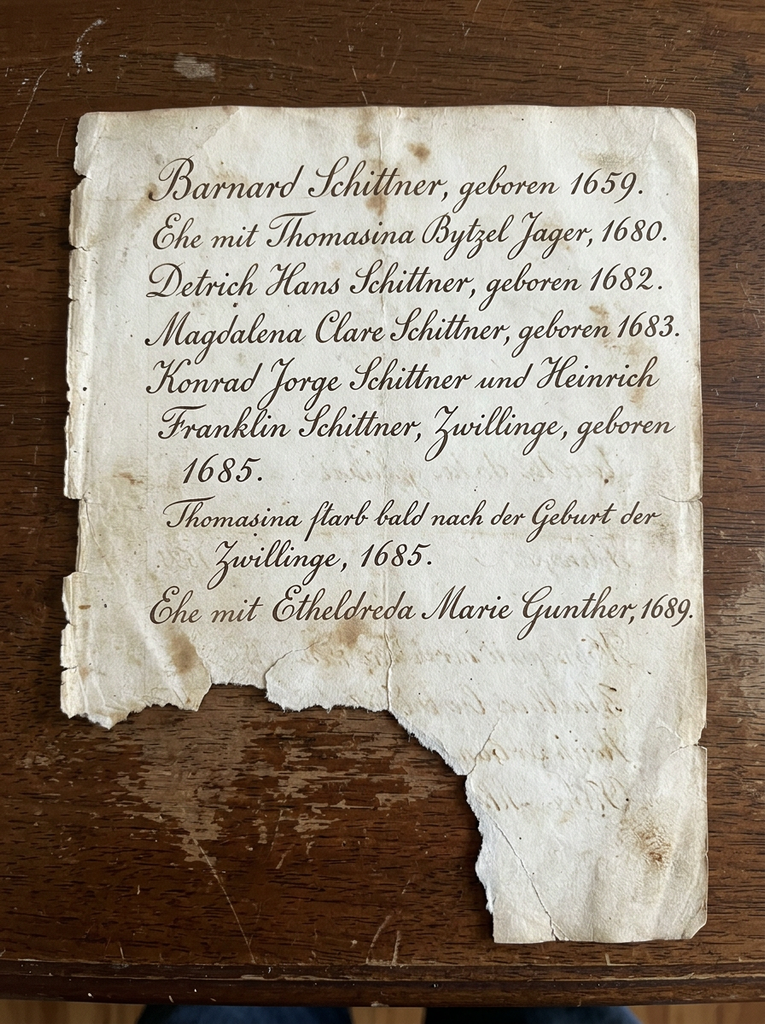
Figure 1. Surviving Schittner family record fragment, recording events dated 1659–1689. Original provenance undetermined.
SECTION TWO: – Boris & Maggie — The Earliest Surviving American Bible Entry
The earliest surviving entry in the Schitt family Bible records Boris Schitt, born in 1591, and Maggie Schitt, born in 1601. Their marriage is recorded in 1620.
Two children appear in the surviving family record: Mary Schitt, born 1621, and Isaac Schitt, born 1623. Boris died in 1644 and Maggie in 1649. Isaac’s death is recorded only approximately, as c. 1680.
No death entry survives for Mary, and no later record presently held by the Archives establishes what became of her.
Isaac represents the probable continuation of the surviving Schitt line. The difficulty is that the record then goes quiet. No surviving family material presently establishes the generations between Isaac Schitt and the appearance of Amos Schitt in 1718.
Archival Status: Earliest surviving Schitt family Bible entry. Continuation through Isaac probable; intervening generations undocumented.
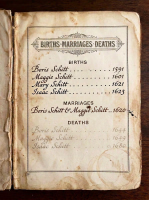
Figure 2. Surviving Schitt family Bible page recording Boris and Maggie Schitt and their children, Mary and Isaac.
SECTION THREE: – Amos, Rebecca & Fancy — The Line Reappears
The surviving family record resumes with Amos Schitt, born in 1718. Rebecca Schitt is recorded as born in 1731, and their marriage in 1752.
Their daughter Opulence Schitt, identified in the record as “Fancy,” was born in 1755. Amos died approximately 1764, leaving Rebecca and Fancy as the surviving documented members of this household. Rebecca’s death is recorded approximately as c. 1780.
In 1782, Opulence “Fancy” Schitt married Mathew David Talon. Her death is recorded in 1807. This marriage provides the first surviving documentary connection between the Schitt and Talon family lines.
What the page does not establish is equally important: Amos’s parentage is not recorded. Nothing in the surviving Bible entry identifies Isaac Schitt—or any other member of the earlier family—as Amos’s father or grandfather.
Archival Status: Documented Schitt household beginning in 1718. Relationship to the earlier Boris–Isaac line remains unproven.
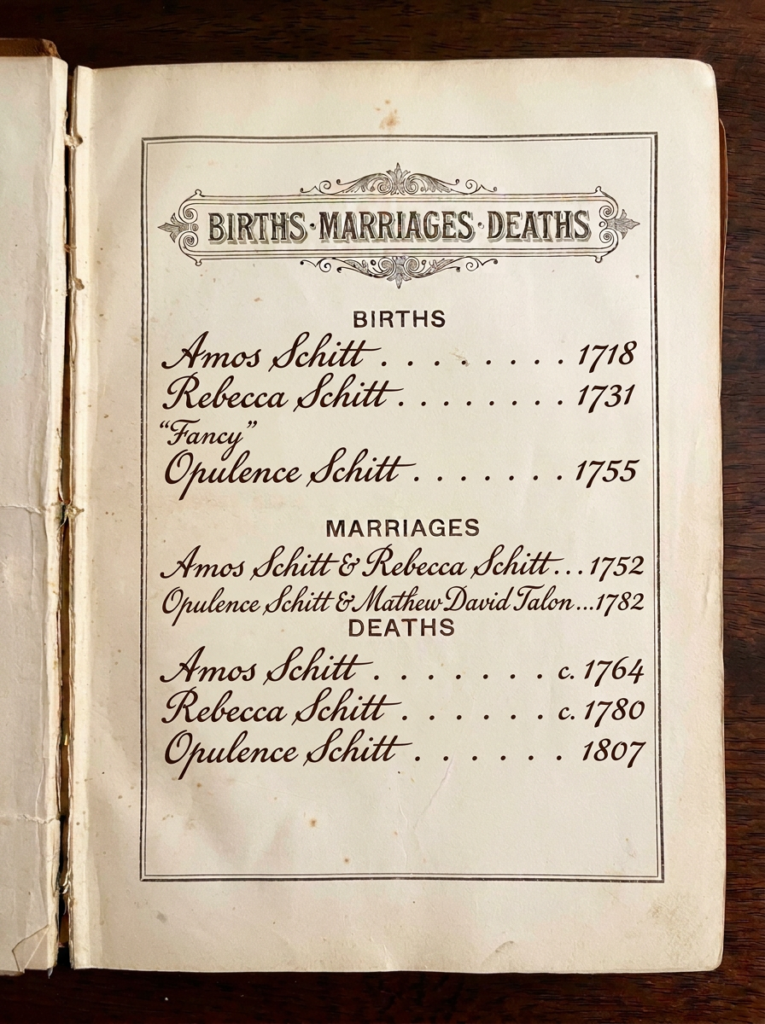
Figure 3. Surviving Schitt family Bible page recording Amos and Rebecca Schitt, their daughter Opulence “Fancy” Schitt, and Fancy’s 1782 marriage to Mathew David Talon.
Archivist’s Note:
The absence of a surviving genealogical chain between Isaac Schitt and Amos Schitt has occasionally encouraged attempts to improve the record. The Archives has resisted this temptation.
Mostly.
The Schittner fragment remains preserved with the collection pending evidence establishing where—or whether—it belongs.